Approach
A good garden starts with understanding the space.
No two gardens ask for quite the same thing. Each has its own light, soil, slopes, trees and habits of use. Even so, a considered landscaping project tends to move through a familiar set of stages — and knowing them makes it easier to plan your own.
Principles worth holding on to
- Give the garden structure before adding detail.
- Good planting works with the space rather than fighting it.
- Plan for the garden it will become, not only the one on day one.
How a garden project comes together
-
Understand the space
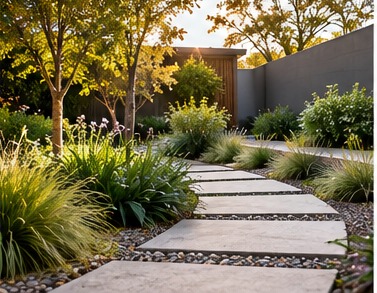
A garden project usually begins by looking closely at what’s already there: where the sun falls through the day, how the ground lies, where water runs, which trees and plants are thriving and which are struggling.
It’s also the moment to notice how the garden connects to the house — the views from inside, the doors people actually use, the corners nobody goes to.
Worth asking: what does the garden do well already?
-
Clarify how the garden should be used
A garden for children to run around in looks different from one built for quiet mornings or for entertaining. Being clear about this early shapes everything else — how much lawn, where the shade should be, which areas need to be open and which can be planted densely.
Worth asking: who uses the garden, and for what?
-
Consider structure and planting
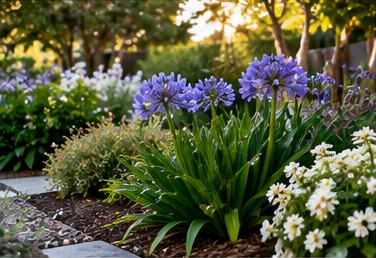
With the purpose clear, the garden’s structure can be set: the shape of the lawn and beds, the routes through the space, and which existing trees and features to build around.
Planting follows the structure — layered for depth, chosen to suit the light and the Bloemfontein climate, and spaced to allow for how big each plant will eventually grow.
Worth asking: what should the garden look like in a few years, not just next month?
-
Carry out the landscaping work
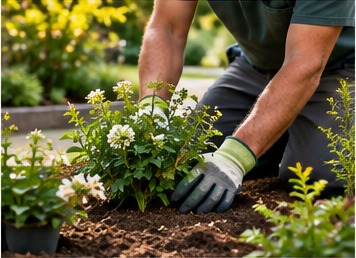
Then the plan becomes a garden. Depending on the project, this can mean clearing, preparing beds, shaping lawn areas, removing trees that no longer belong, and planting.
Doing the work in a sensible order matters — structure and groundwork first, then planting, so nothing new has to be disturbed later.
Worth asking: what needs to happen first so that later work doesn’t undo it?
-
Plan for ongoing care
A new garden is at its most vulnerable in its first seasons. Regular maintenance — lawn care, tidying beds, pruning — helps the planting establish and keeps the garden’s shape intact as everything grows in.
Thinking about upkeep from the start also keeps the garden realistic: one that suits the time and attention it will actually get.
Worth asking: how much looking-after should this garden need?
Before you call
A few things worth thinking about.
None of these need firm answers. They simply make the first conversation about your garden more useful.
- Which parts of the garden you like, and which you’d change tomorrow.
- How you’d like to use the space — and how that might change over the next few years.
- Any trees that worry you, or that you’d never want to lose.
- Whether you’re after a full change, a makeover of one area, or help keeping things in order.
- How much time you want to spend looking after the garden yourself.
Start with a conversation
Talk through your garden with William.
Describe the space and what you’d like from it. It’s the easiest way to work out where to begin.